How Does Digital Night Vision Work?
Digital night vision works by turning reflected light into a screen image using a sensor and processor. In total darkness, an infrared illuminator supplies light the sensor can detect.
On this page (11 sections)
- How does digital night vision work?
- What does infrared do in digital night vision?
- Can digital night vision see without an IR illuminator?
- How is digital night vision different from analog?
- Which features make a useful night vision image?
- How do you choose a digital night vision device?
- How should you set up and care for digital night vision?
- Which common mistakes spoil the view?
- Can digital night vision work during the day?
- Does digital night vision show heat?
- Which digital night vision setup should you choose?
Digital night vision works by capturing reflected light with an electronic sensor and showing the processed image on a screen. In total darkness, an infrared illuminator supplies light that the sensor can detect.
The useful buying question is how much detail you'll see at your intended distance. Sensor performance, focus, illumination, and viewing format matter more than a large zoom number.
How does digital night vision work?
Digital night vision turns incoming light into an electronic picture. A lens gathers light, a sensor converts it into a signal, and a processor prepares that signal for the display.
The sensor can use faint visible light, near-infrared light, or both. Depending on the device and mode, the screen may show a color image or a monochrome view.
How digital night vision works from lens to screen
The lens, sensor, processor, and display form a chain. A weakness at any stage can limit the detail you see.
- The lens focuses light from the scene onto the sensor.
- The sensor converts that light into an electrical signal.
- The processor adjusts brightness, contrast, and other image settings.
- The display presents the result through an eyepiece or on a screen.
- When ambient light is insufficient, an IR illuminator adds light to the scene.
Recording saves an electronic image, but a larger saved file cannot recover detail that the sensor never captured. Treat recording resolution and useful viewing detail as separate buying questions.
What does infrared do in digital night vision?
An infrared illuminator lights the scene for the sensor when visible light is scarce. Objects reflect some of that IR back through the lens, much as they reflect a flashlight's beam.
Common illuminator wavelengths include 850 nm and 940 nm. An 850 nm emitter may show a faint red glow, while 940 nm generally has less visible glow.
Neither makes you invisible to other night vision equipment. Don't choose a wavelength on the assumption that people or animals cannot detect your presence.
Nearby leaves, walls, and fences can reflect enough IR to wash out a more distant subject. Change your position or lower the illumination before assuming you need a stronger beam.
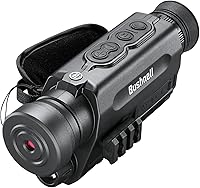
The Bushnell Equinox X650 suits stationary handheld viewing and recording. Its 3x optical magnification brings distant subjects closer before capture, while up to 5x digital zoom enlarges the captured image.
Bushnell claims viewing out to 650 feet, which should not be read as a promise of identification at that distance. Skip it if broad, close-range scanning is your priority; its magnified view favors subjects farther away.
The tripod-mount adaptor helps when holding the view steady matters. Our Bushnell Equinox X650 review covers this model in more detail.
Can digital night vision see without an IR illuminator?
Yes, when enough ambient light reaches the sensor. Moonlight or nearby lighting may be sufficient, but a sensor cannot form a useful image from a scene with no detectable light.
In weak light, the picture may become grainy or lose moving detail. Try observing with IR off first, then add only as much illumination as the scene needs.
If your main goal is finding an animal's heat signature rather than seeing reflected detail, compare night vision vs thermal imaging. A sensitive digital sensor still uses a different process from a thermal camera.
How is digital night vision different from analog?
Digital night vision uses an electronic sensor and screen, while analog night vision uses an image intensifier tube. Digital designs make recording and selectable display modes possible.
Digital processing can introduce delay between movement in the scene and the displayed view. Refresh rate describes how often the image updates, but it does not measure every source of delay.
For moving use, consider field of view, mounting, and how the display affects your awareness of nearby obstacles. Our digital vs analog night vision guide explains the tradeoffs between the systems.
Which features make a useful night vision image?
Focus, usable light, and field of view determine whether you can find and recognize your subject. Resolution helps only when the optics and sensor capture enough detail.
Separate these terms when comparing devices:
- Optical magnification enlarges the view before the sensor captures it.
- Digital zoom crops and enlarges the captured image, making grain and blur more obvious.
- Field of view describes how much of the scene fits in the picture.
- Refresh rate describes how often the displayed image updates.
- Claimed range describes a reach under particular conditions, not guaranteed recognition.
Start at the lowest zoom to locate a subject, then enlarge the view if needed. Maximum zoom is a poor starting point for scanning a yard or following movement.
The GOYOJO GNG2K suits broad-area observation and buyers who need a helmet mount. It combines a 2688 x 1520 image, 60 Hz refresh rate, 940 nm IR, and 1–4x digital zoom.
Its included quick-release helmet mount and electronic compass support a mounted setup. Skip it if you only want occasional viewing from a chair and have no use for the mounting hardware.
GOYOJO claims visibility up to 300 m in total darkness. Plan around the distance at which you need to recognize a subject, rather than treating that claim as a reliable identification limit.
A helmet mount frees your hands, but it does not make walking through darkness safe. Learn the controls while stationary, and keep a separate light available for checking your footing.
How do you choose a digital night vision device?
Choose your viewing position and task first. Someone watching a fixed spot needs a different setup from someone scanning a wide property boundary.
A monocular puts the image at one eye and suits brief checks or focused observation. A device with a larger viewing screen suits stationary use when you prefer looking at a display instead of through a small eyepiece.
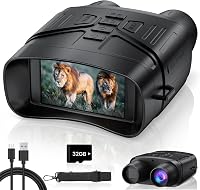
The ROQIOO 4K Night Vision Binoculars suit stationary backyard viewing. Their 3-inch IPS screen, 850 nm illuminator with 7 levels, and 5000 mAh rechargeable battery fit sessions where you can stop and adjust the view.
They also include a compass and a 32 GB memory card. At 0.63 kg, they are a less appealing choice for someone who wants a small device for frequent brief checks.
The available 10x zoom should help frame an already located subject, rather than drive the buying decision. Battery capacity also cannot tell you runtime without knowing the power used by the screen and illuminator.
For more options, compare the best night vision binoculars and the best night vision monocular.
How should you set up and care for digital night vision?
Learn the controls before darkness, then adjust focus and illumination at your observation point. Check power, storage, and mounting before heading outside.
- Charge the device or fit the required batteries.
- Fit a compatible memory card if you plan to record, following the manual's formatting instructions.
- Secure the strap or mount and identify the power, focus, zoom, and IR controls.
- Begin at low zoom and focus on your subject.
- Adjust any eyepiece control for clear screen text, then refine scene focus.
- Raise IR gradually until distant detail becomes useful.
Keep screen brightness low enough to view comfortably. A bright display can make it harder to see your surroundings when you look away.
Remove loose grit before wiping lenses, and use an appropriate lens cloth. Let damp equipment dry before storage, follow its weather limits, and remove replaceable batteries before long storage.
Which common mistakes spoil the view?
Poor focus and excessive IR often make the picture worse before resolution becomes the limiting factor. Adjust the setup before reaching for more zoom.
Avoid observing through a closed window with the built-in IR on. The glass can reflect the beam back into the device and overwhelm the view.
Fog, rain, and nearby vegetation can also scatter or reflect illumination. Move to a clearer sightline instead of increasing brightness repeatedly.
Don't mistake seeing movement for identifying its source. If you cannot recognize the subject clearly, move to a safer observation position or use suitable visible light.
Can digital night vision work during the day?
Some digital devices support daytime viewing, but the correct settings depend on the model. Follow its manual rather than applying advice meant for analog equipment.
The Bushnell Equinox X650 supports day or night video capture. Our guide to using digital night vision during the day explains what to check before switching modes.
Does digital night vision show heat?
No, digital night vision shows reflected light, not a map of temperature differences. An IR illuminator lights surfaces; it does not turn the device into a thermal camera.
Thermal imaging detects emitted infrared radiation and can reveal heat contrasts without an illuminator. Learn how a thermal imaging camera works if locating warm objects is your main goal.
Which digital night vision setup should you choose?
Understanding how digital night vision works helps you choose around the scene: available light, viewing distance, and how you'll hold the device. Choose the Bushnell for magnified stationary viewing, GOYOJO for broad scanning and mounting, or ROQIOO for screen-based backyard observation.
Prioritize clear focus and useful illumination over maximum zoom. Use our night vision binoculars and monocular buying guide to narrow the format before choosing a model.
Frequently asked questions
How does digital night vision work in total darkness?
Digital night vision uses an infrared illuminator to light the scene when no usable ambient light is available. Its sensor captures the reflected IR, and a processor turns that signal into a screen image; useful detail depends on distance, focus, weather, obstacles, and the device's optics.
Does digital night vision need infrared light?
Digital night vision can work without an IR illuminator when enough ambient light reaches its sensor; moonlight or nearby lighting may provide that light. In darker conditions, adding IR helps reveal the scene, but increasing its brightness can also cause glare from nearby branches, walls, or glass.
Can digital night vision work during the day?
Some digital night vision devices support daytime use, including the Bushnell Equinox X650. Follow the instructions for your exact model before switching modes or exposing it to bright conditions; digital and analog devices have different designs, so advice for one system should not replace the other's manual.
Is digital night vision the same as thermal imaging?
Digital night vision shows reflected visible or near-infrared light, while thermal imaging detects emitted infrared radiation to reveal temperature differences. Night vision helps you inspect a lit scene's shapes and surface detail; thermal is useful for finding heat contrasts, but it does not show the same kind of image.