Night Vision vs Thermal: Which Do You Need? (October 2026)
For night vision vs thermal, choose night vision for recognizable scene detail and thermal for spotting heat differences. Use a thermal monocular for outdoor searches or an inspection thermal camera for home temperature checks.
On this page (9 sections)
- Night vision vs thermal: what is the main difference?
- Which works better in total darkness and poor weather?
- Which should you choose for wildlife observation?
- Which is better for home inspection?
- Can either device see through walls or windows?
- How should you set up the device before using it?
- What ownership details matter before buying?
- Which common buying mistakes should you avoid?
- Which should you choose: night vision or thermal?
For night vision vs thermal, choose night vision to view a recognizable nighttime scene and thermal to find heat differences without scene lighting. The right choice depends on whether you need to watch activity, locate wildlife or inspect a home.
Digital night vision forms an image from available light or reflected infrared illumination. Thermal imaging detects emitted infrared energy, making exposed warm animals or unusual surface temperature patterns stand out.
Start with your main task, rather than the longest range claim. A wildlife spotter, a nighttime viewer and a home inspection camera solve different problems.

Night vision vs thermal: what is the main difference?
Night vision shows reflected light; thermal shows infrared differences associated with surface temperature. That changes both the information you get and the mistakes you need to avoid.
Night vision can show branches, fences, ground features and animal outlines in a familiar scene. In total darkness, a digital device needs infrared illumination to provide light its sensor can use.
Thermal can reveal an exposed warm body against cooler surroundings without lighting that scene. Its colors or shades represent infrared differences, rather than the natural appearance of fur, clothing or leaves.
The night vision model here is digital. Other night vision designs have different operating limits, so avoid applying advice about this model to every device called night vision.
Our digital night vision guide explains the sensor and illumination process. For the heat-based alternative, read how thermal imaging cameras work.
Night vision vs thermal: detection is not identification
Detection means noticing something; identification means having enough detail to recognize it. A small bright patch can show that something warm is present without revealing what it is.
Distance reduces how much of the image a subject occupies. A larger display or enlarged view cannot recover features the sensor never captured.
For wildlife, consider 3 separate goals: finding movement, recognizing an animal's general shape and identifying its species. Choose equipment around the hardest of those tasks you actually need to do.
Which works better in total darkness and poor weather?
Thermal works without scene lighting, while digital night vision needs available light or an IR illuminator. Neither guarantees a clear view in every outdoor condition.
An IR illuminator sends light outward and captures the reflection. Nearby leaves, fence wires or other objects can reflect strongly, making a more distant subject harder to see.
Mist and fog can also scatter that illumination back toward the device. Changing position to clear nearby obstacles may help more than increasing illumination.
Thermal visibility depends on contrast between the subject and its surroundings. An animal against cool ground may stand out more clearly than the same animal against sun-warmed rocks.
Rain, fog and moisture can reduce useful thermal range too. Dense leaves and solid objects block the view, so thermal does not provide a reliable view through thick vegetation.
If you need daytime use as well, read whether digital night vision works during the day. Follow the instructions for the exact device before exposing it to daylight.
Which should you choose for wildlife observation?
Choose thermal to search for exposed warm animals and night vision to watch a scene with more familiar detail. Your usual surroundings matter as much as the device category.
For scanning an open field or checking a woodland edge, thermal can draw attention to heat that blends into visible darkness. It is less useful when the animal is fully hidden behind a tree or dense brush.
Night vision suits watching an opening, feeding area or other known location. Seeing nearby terrain and the animal together can make its movement easier to follow.
Scan slowly and pause when something catches your attention. A quick sweep can hide a small subject in motion blur or leave you looking at an unfocused image.
These handheld viewing tools also demand attention. Stop in a safe position before looking through one, rather than relying on its screen while walking over uneven ground.
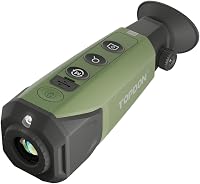
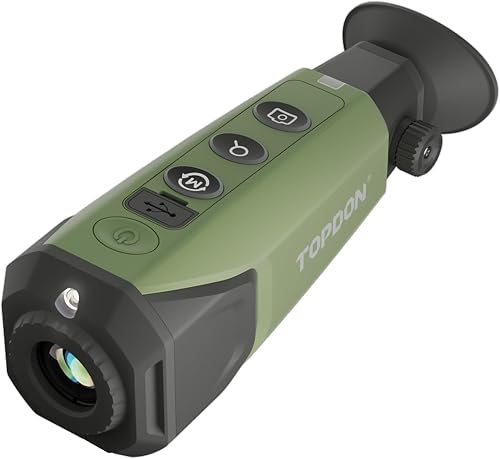
Choose the TOPDON TS004 for outdoor heat searches
The TOPDON TS004 Thermal Monocular suits buyers whose first job is finding heat outdoors. It combines 256 x 192 IR resolution, a 50Hz refresh rate and a 13mm lens with manual focus.
TOPDON claims detection up to 410 meters and clear detail visibility within 100 yards. Treat detection distance as a search capability, rather than a promise that you can identify a particular animal at that range.
Wireless connection through the TopInfrared app allows live phone monitoring and image or video capture with audio. This is useful when another person needs to share the view.
TOPDON gives it an IP67 protection rating and claims resistance to drops up to 2 meters. Skip it if your main need is a home inspection tool with temperature readings, or if you primarily want visible textures and scene detail.
Our guide to the best thermal monocular for birding and wildlife helps narrow outdoor choices. Thermal can locate heat, but bird identification may still require a clearer view of markings.
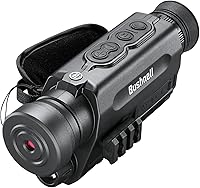
Choose the Bushnell Equinox X650 for watching activity
The Bushnell Equinox X650 suits buyers who want to watch and record a scene by day or night. Its built-in IR illuminator supports viewing in total darkness, with Bushnell claiming a range up to 650 feet.
It has 3x optical magnification and up to 5x digital zoom. Start with the optical view, focus carefully and use digital enlargement only when a larger image helps you inspect what is already visible.
Video saves directly to a microSD card, and the included tripod-mount adapter supports a fixed observation position. That arrangement suits watching one area without holding the device throughout a session.
Skip this model if you need surface temperature measurements or want to detect heat without illuminating the scene. Its IR-assisted image depends on light reaching the subject and returning to the sensor.
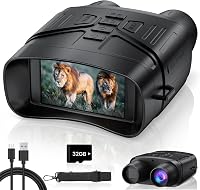
Compare viewing formats in our best night vision binoculars guide. Our night vision binocular and monocular buying guide also helps you choose around viewing habits and handling.
Which is better for home inspection?
Choose a thermal inspection camera for comparing surface temperatures around a home. Night vision can brighten a dark scene, but it cannot reveal temperature patterns.
Around windows and doors, thermal may show cooler edges or uneven surfaces that deserve a closer look. On heating systems, it can help you compare warm and cool areas.
A thermal image gives you a place to investigate. It cannot tell you whether a pattern comes from missing insulation, airflow, dampness, sunlight or another cause without follow-up.
For insulation checks, scan when indoor and outdoor temperatures differ enough to create useful contrast. Recent sunlight, heating changes and open doors can alter the pattern, so note conditions before drawing conclusions.
Choose the TOPDON TC004 Mini for household checks
The TOPDON TC004 Mini suits homeowners who need temperature readings and photos of areas that need follow-up. It starts with 128 x 128 thermal imaging and enhances the image to 240 x 240 using TISR technology.
That enhanced image size is different from native sensor resolution. Keep those figures separate when comparing it with another thermal camera.
Its 40° x 30° field of view suits scanning nearby surfaces, and its temperature range is -4°F to 842°F. Highest, lowest and center markers help you compare points within the image.
You can set a temperature threshold for an on-screen warning and automatic photo capture. Built-in storage also supports saving manual photos for later comparison.
Skip this model if your main goal is distant wildlife observation through an eyepiece. Its strengths are inspection features and temperature documentation.
Our thermal camera buyer's guide explains the choices for home use. A thermal image cannot guarantee electrical safety, so leave exposed wiring and energized components to a qualified electrician.
Can either device see through walls or windows?
Neither sees through ordinary walls, and thermal generally shows a window's surface and reflected infrared energy. Night vision may view through clear glass, but its illuminator can create glare.
For night vision through a window, an indoor reflection may overwhelm the scene outside. If conditions allow, observing from a safe outdoor position removes the glass from the light path.
A thermal patch on a wall may reflect heat moving through the wall, rather than a direct image of a hidden object. Pipes, framing and insulation can influence surface patterns without becoming visible themselves.
Reflections also affect thermal readings on shiny metal and glass. Change your viewing angle and compare neighboring surfaces before deciding that an apparent hot spot belongs to the object itself.
How should you set up the device before using it?
Learn the controls, focus the image and confirm recording before the session matters. A clear, stable view is more useful than maximum zoom or the brightest display.
For digital night vision, begin with a nearby stationary subject in a permitted lighting mode. Adjust manual focus, then move to your intended viewing distance and refocus.
Use the lowest effective IR illumination setting if the device provides adjustment. Excess reflection from nearby objects can obscure the background even when it makes the foreground brighter.
For thermal wildlife viewing, learn what familiar objects look like before searching farther away. Compare animals, people, trees and sun-warmed surfaces so you do not mistake every bright shape for wildlife.
For home inspection, save a normal reference area as well as the unusual patch. Record the location and conditions so a later image has useful context.
Thermal colors can change when the camera rescales the displayed temperature range. Our guide to what thermal camera colors mean explains why the same color does not always indicate the same temperature.
Check recording separately from viewing. Confirm that the X650 saves a clip to its card, that the TS004 app connection works, or that the TC004 Mini stores a photo before relying on saved evidence.
What ownership details matter before buying?
Match power, recording and care needs to the way you will use the device. A tool that fits a short household check may need a different routine for a long outdoor session.
The X650 uses 3 AA batteries. TOPDON claims up to 11 hours of operation for the TS004 and 15 hours for the TC004 Mini, so plan charging around your intended session rather than expecting identical runtime in every condition.
The TC004 Mini includes a charging cable but no charging head. It also uses an electronic manual, so download the instructions before taking it somewhere without convenient internet access.
Keep lenses clean with suitable optical cleaning materials. Remove loose grit before wiping, avoid touching optical surfaces and follow the device instructions for cleaning and storage.
Dry damp equipment before putting it away. The TC004 Mini has IP54 protection, so give it more shelter from wet conditions than the outdoor monocular.
Store saved images with useful names or notes. A thermal photo without its location or viewing conditions is harder to interpret later.
Which common buying mistakes should you avoid?
Avoid choosing by maximum range, zoom or enhanced resolution alone. Those figures do not tell you whether the device will answer your actual question.
Buying an outdoor thermal monocular for household diagnosis can leave you without the measurement tools you need. Buying an inspection camera for wildlife can give you an awkward format for distant observation.
Do not mistake digital enlargement for added detail, or enhanced thermal output for a higher native sensor count. Compare each specification with the same kind of specification on the alternative.
Do not buy both categories before establishing a need for both. A fixed nighttime viewing spot may call for digital night vision alone, while occasional window and insulation checks call for an inspection thermal camera.
Finally, avoid treating an image as proof of a cause or identity. Confirm a suspected building fault with a suitable follow-up check, and identify wildlife only when the view supports it.
Which should you choose: night vision or thermal?
For night vision vs thermal, pick the device that answers your main question. Choose the X650 to watch nighttime activity, the TS004 to search for exposed outdoor heat, or the TC004 Mini to compare household surface temperatures.
If you cannot name the task beyond “seeing in the dark,” decide what you need to recognize and where you will stand. That choice will narrow the device category before extra features distract you.
For home checks, compare the best thermal cameras for home inspection. If you still need help understanding the heat image itself, start with how thermal imaging cameras work.
Frequently asked questions
Is night vision or thermal better in total darkness?
Thermal is the better choice for finding heat differences without scene lighting. Digital night vision can also work in total darkness with an infrared illuminator, but it needs reflected light to form its image, and nearby branches, glass or mist can send that light back toward the device.
Can thermal see through walls?
No, thermal cannot see through ordinary walls. It shows infrared patterns on the surface facing the camera, which may reveal a temperature difference linked to something behind it, but a cold or warm patch does not identify the hidden object or establish what caused the pattern.
Can night vision identify an animal better than thermal?
Night vision can show more recognizable animal features when light, distance and focus allow. Thermal is useful for locating an exposed warm body, but identification still needs enough detail to distinguish its shape and behavior, so never treat a distant heat patch as proof of a particular species.
Can you use digital night vision during the day?
Some digital night vision devices support daylight use, including the Bushnell Equinox X650 with its day and night video modes. Follow the instructions for the exact device, since daylight limits differ across night vision designs, and do not assume advice for a digital model applies to an analog device.
Which is better for checking a house for drafts?
A thermal inspection camera is the better tool for finding surface temperature patterns near windows, doors and insulation. It does not directly measure moving air, so follow up a cold patch with a physical inspection and consider sunlight, dampness and heating conditions before deciding that a draft caused it.