Bushnell Equinox X650 Review: Worth It? (October 2026)
The Bushnell Equinox X650 suits day and night observation if you want video recording, a built-in infrared illuminator and the option to use a tripod. Choose an alternative below if cable charging, head mounting or high-resolution recording is your main priority.
On this page (8 sections)
- Who should buy the Bushnell Equinox X650?
- What do its zoom and range figures mean?
- How should you choose power and recording features?
- How do you set up the X650 before an outing?
- Which alternative suits your viewing routine?
- What mistakes make night vision harder to use?
- How should you clean and store a digital monocular?
- Should you choose the Bushnell Equinox X650 or an alternative?
The Bushnell Equinox X650 suits day and night observation when you want a handheld monocular that also records video. Its built-in infrared illuminator and tripod-mount adaptor make it a practical candidate for watching from a campsite or another fixed spot after dark.
Choose it if replaceable batteries fit your routine and you want to save what you see. A rechargeable model, a head-mounted design or a device focused on recording may suit you better if one of those needs comes first.
Who should buy the Bushnell Equinox X650?
The X650 is a good fit for planned observation from a safe stopping point, with occasional handheld scanning between recordings. It makes the most sense when your outing spans daylight and darkness and you prefer one device for both.
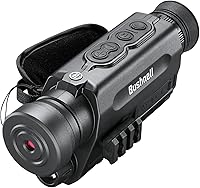
Bushnell Equinox X650

- 3x optical magnification
- Up to 5x digital zoom
- Day and night video capture
- Built-in IR illuminator
- Tripod-mount adaptor
A handheld option for outings that continue after dark, with video recording and an adaptor for tripod use. Bushnell claims an infrared viewing range of up to 650 ft.
Pros
- Records in daytime and nighttime modes
- Optical magnification before digital enlargement
- Built-in infrared illumination
- Tripod-mount adaptor included
Cons
- Needs spare AA batteries for field replacement
- Digital enlargement does not add optical detail
- Maximum range does not guarantee identification distance
A camper watching the edge of a clearing can use it by hand, then attach it to a tripod for a longer recording. That mounting option matters because camera movement becomes more distracting as the view gets larger.
Its manual focus also suits buyers willing to adjust the image as subjects change distance. Spend time learning that control before expecting to follow wildlife that moves between nearby cover and open ground.
Who should skip the Bushnell Equinox X650?
Skip the X650 if cable charging is a firm requirement or you specifically need a head-mounted format. Those needs point directly to the alternatives below.
Also choose a different approach if your main goal is finding an animal hidden in darkness rather than viewing a visible scene. Our guide to night vision vs. thermal imaging explains when heat detection better matches that job.
A magnified monocular is an observation tool, so plan to stop before looking through it. Don't choose it as your only way to judge footing, nearby obstacles or a route through unfamiliar ground.
What do its zoom and range figures mean?
The X650 combines 3x optical magnification with up to 5x digital zoom, but those numbers describe different things. Optical magnification forms an enlarged view through the optics; digital zoom enlarges the captured image electronically.
Use the wider view to find your subject, then add digital enlargement only when it helps you examine something specific. Starting at maximum zoom makes it harder to locate an animal and keep it in the frame.
Bushnell claims infrared viewing at up to 650 ft in total darkness. Treat that as a maximum viewing claim, rather than the distance at which you can reliably identify a species or read a small detail.
Spotting a large shape, recognizing an animal and seeing its markings require different amounts of detail. Decide which task matters before comparing range claims across brands.
Close branches, wet leaves and bright nearby surfaces can reflect infrared light back toward a digital night vision device. A clear sightline may help more than extra zoom when the foreground overwhelms the distant subject.
Our explanation of how digital night vision works covers the sensor and infrared light behind this type of image.
How should you choose power and recording features?
Choose the X650 if carrying replacement batteries suits your outings; choose rechargeable power if you already plan around charging stops. The Bushnell uses 3 AA batteries, included with the device.
For a trip away from outlets, pack compatible spares and keep them dry, with their terminals protected. For routine evenings near home, charging a device between sessions may be simpler than managing replacements.
Battery capacity alone cannot tell you which alternative will run longer. Screen use, infrared output, recording and operating conditions all affect consumption, so avoid comparing runtime from mAh figures alone.
The X650 saves day and night video to a microSD card. Before ordering, confirm compatible card capacity and recording resolution if either determines whether it will handle your planned recordings.
If you only want brief clips, easy recording and file access deserve more attention than a large storage ceiling. For longer sessions, plan how you'll copy files, clear space and keep enough power available.
How do you set up the X650 before an outing?
Set it up in daylight and confirm focus, recording and playback before leaving. Learning the controls in a lit room or yard saves you from searching for them while a subject moves away.
- Fit the batteries with the correct polarity and follow the manual's card installation steps.
- Select daytime mode and aim at a stationary subject at a useful distance.
- Adjust focus until edges look clear before adding digital zoom.
- Make a short video, stop recording and check the saved file.
- Attach the tripod-mount adaptor if you plan to record from one position.
After dark, begin with a clear view of the area rather than a close foreground object. Use the appropriate nighttime mode and infrared controls as described in the manual.
Refocus when your subject changes distance. Enlarging an out-of-focus image makes the blur bigger, so settle focus before deciding you need more zoom.
For a fixed setup, position the tripod on firm ground and check that the device is secure before letting go. Leave enough space to reach the controls without knocking the support.
The X650 supports daylight use, but operating advice differs across night vision technologies. Read our guide to using digital night vision during the day if you're comparing it with another type.
Which alternative suits your viewing routine?
Choose an alternative when its power, mounting or recording format solves a specific need better than the X650. A longer range claim or larger zoom number alone is a weak reason to switch.
YUANZIMOO Night Vision Monocular for campsite recording
The standard YUANZIMOO suits buyers who want a rechargeable setup with recording accessories included. Its battery can be charged from a power bank or car charger, which fits trips with a planned charging source.
It includes a tripod and card reader, plus photo, video and playback modes. Its 1.5-inch TFT screen gives you a place to review captures, though that small display deserves consideration if viewing comfort matters most.
The optics provide 2x magnification, with 8x digital zoom and 7 infrared illumination levels. YUANZIMOO claims a maximum viewing range of 984 ft, which does not guarantee an identification advantage over Bushnell.
Choose it for the charging routine and included kit. Skip it if you want to replace AA batteries in the field or prefer a larger screen for reviewing footage.
YUANZIMOO Head-Mounted Monocular for fixed observation
The head-mounted YUANZIMOO suits buyers who specifically want to support the device on their head during observation. Its rechargeable power and photo and video modes also support recording from a fixed spot.
This model has the same stated optical and digital magnification as the standard YUANZIMOO above, with adjustable infrared illumination. Choose between them by mounting preference rather than expecting the head-mounted format to improve image detail.
YUANZIMOO directs users to keep this model out of rain and mist and operate it between -5°C and 40°C. Skip it for outings where those conditions are likely.
Check fit and viewing position while seated before using a head-mounted device outdoors. Magnified screen viewing changes how you judge your surroundings, so remove it before moving across uneven ground.
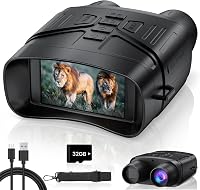
Minolta MNDM10B for travel recording
The Minolta suits buyers whose first priority is saving high-resolution files in a compact device. Its integrated IPS display and USB-C connection support reviewing footage, charging and file transfer.
A 32 GB memory card is included, with support for microSD storage up to 128 GB. That expansion is useful if you want room for more files before returning to a computer.
Capture resolution describes the saved file, while usable nighttime detail also depends on the scene, focus, light and stability. Choose Minolta for its recording features without assuming that larger files mean clearer distant subjects after dark.
Skip it if warranty coverage is essential, since its warranty specification states no warranty. For a broader comparison of viewing formats, use our night vision binoculars buying guide.
What mistakes make night vision harder to use?
The most common avoidable mistakes are too much zoom, poor focus and an obstructed sightline. Fix those before blaming a device's range.
- Starting fully zoomed in: Find the subject in the widest view first, then enlarge it as needed.
- Recording through glass: Infrared light can reflect from the window into the device, so choose a safe position with a clear outdoor sightline.
- Leaving bright vegetation close to the lens: Shift your position so nearby leaves don't dominate the illuminated scene.
- Chasing movement with fast sweeps: Scan slowly, pause and give yourself time to recognize shapes.
- Waiting until dark to learn recording controls: Practice starting, stopping and saving a clip before the outing.
Avoid judging footage only while holding the device at high zoom. Support it, focus again and compare a short recording at a lower setting to see which view preserves useful detail.
Also check the rules for your location and activity before using night vision for hunting or surveillance. Our guide to whether night vision goggles are legal explains the questions to resolve.
How should you clean and store a digital monocular?
Keep the optics clean, store the device dry and follow the model's instructions for batteries and weather exposure. A digital monocular combines lenses, a screen and electronics, so rough cleaning or damp storage can cause avoidable problems.
Remove loose grit with a blower or soft brush before wiping a lens. Use a clean lens cloth and a suitable lens cleaner when needed, keeping liquid away from openings and controls.
Let a damp exterior dry before putting the device into a closed bag. A storage bag helps with transport, but it doesn't mean the device can handle rain.
Stop recording before switching off or removing a memory card. Copy important clips before formatting storage, and follow the manual's guidance for battery removal during long periods without use.
For the head-mounted YUANZIMOO, follow its specific instructions to charge periodically during storage and remove fully charged batteries. Don't apply one model's battery or weather guidance to every device here.
Should you choose the Bushnell Equinox X650 or an alternative?
Choose the Bushnell Equinox X650 for mixed daylight and nighttime outings when handheld observation, saved video and occasional tripod use match your plans. Its score of 8 reflects that feature fit; image clarity and battery runtime are not established by the specifications alone.
Choose the standard YUANZIMOO for its rechargeable recording kit, or the head-mounted version when that viewing format is essential and conditions suit its care limits. Choose Minolta when capture features and storage expansion lead your decision.
Before settling on any model, name your usual subject, viewing position and power source. Those 3 choices will narrow the field more usefully than maximum zoom, and our best night vision monocular picks offer more options to compare.
Frequently asked questions
Is the Bushnell Equinox X650 worth considering?
The Bushnell Equinox X650 is worth considering for handheld observation that continues after dark, especially if you also want video recording and tripod use. Choose it when replaceable AA power fits your outings; choose a rechargeable alternative when charging by cable better matches your routine.
How far can the Bushnell Equinox X650 see?
Bushnell claims a viewing range of up to 650 ft with the Equinox X650's built-in infrared illuminator in total darkness. Seeing an object at that distance is different from identifying it; subject size, weather, nearby vegetation and the detail you need all affect a useful viewing distance.
Can you use the Equinox X650 during the day?
Yes, the Bushnell Equinox X650 supports daytime viewing and video capture as well as nighttime use. Select the appropriate mode and follow its operating instructions when moving between light conditions; daytime practice also gives you a chance to learn the controls and focus before an evening outing.
Does the Bushnell Equinox X650 record video?
Yes, the Bushnell Equinox X650 records video in daytime and nighttime modes and saves files directly to a microSD card. Before an outing, make a short recording and play it back; check that your card is recognized, the subject is in focus and the file saves correctly.